The version of your future self you've been working toward might not actually be yours. Here's how socialization hijacks the vision, and what to do instead.
A few weeks ago, a Facebook memory landed in my feed.
It was a post from 2017. A photo of me, shoulder up. Smiling. Professional. Controlled.
I remembered exactly why I framed it that way.
I was at the start of my intuitive eating journey, and my body had been regaining the weight I had lost from my very last diet. I was convinced that if anyone saw my "full view" body, they would never hire me as a health professional. So I invested in a professional background decor, an extended tripod and a new camera, all engineered so the angle never dropped below my shoulders. I was building an online presence and hiding a body at the same time.
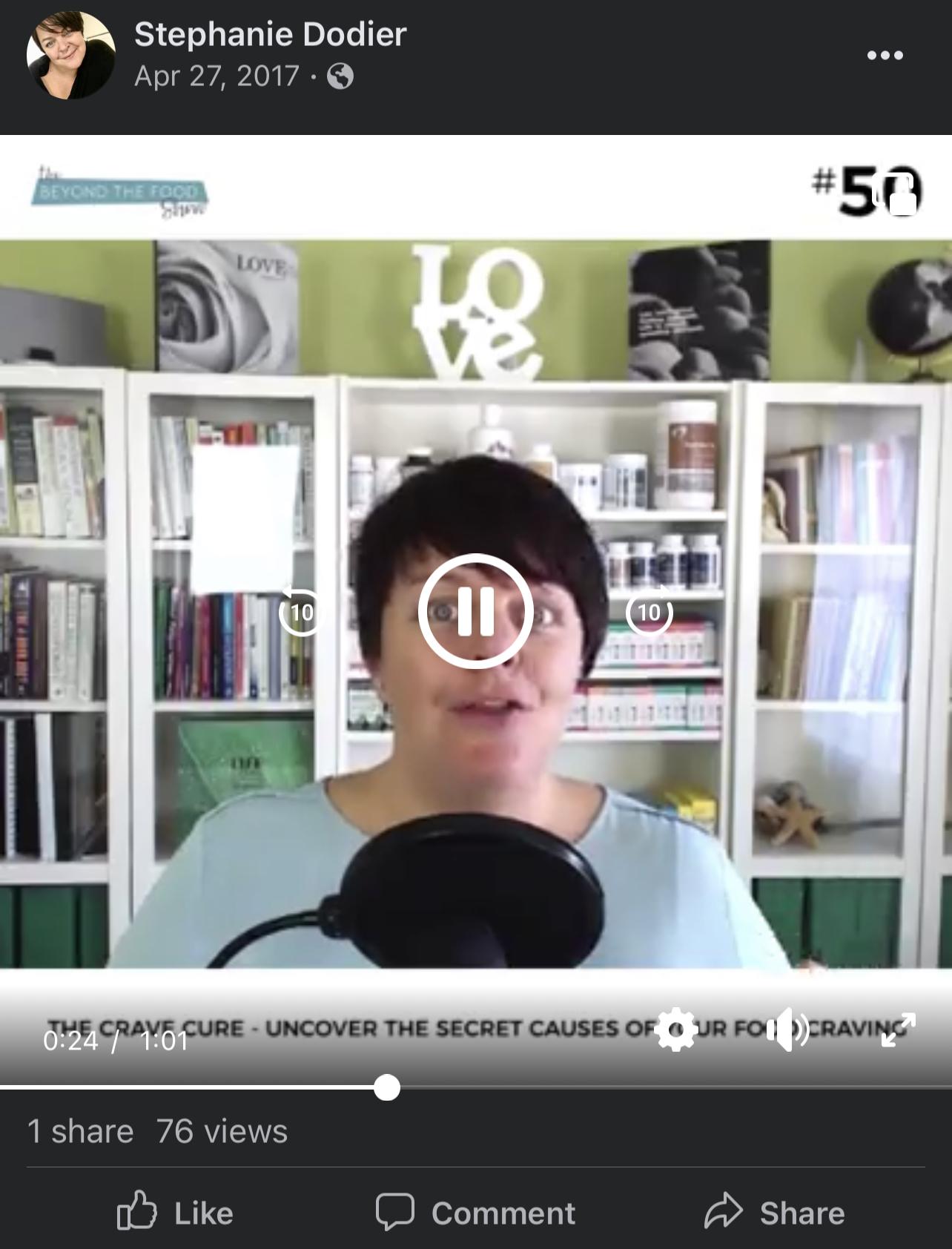
That photo reminded me of the anxiety I was living in back then. It wasn't subtle. It was consuming. Almost PTSD-like in the way it flooded all back in my body.
Here's the paradox. I wasn't a passive person back then. I was goal-oriented, future-focused, driven. I had a very clear picture of who I wanted to become. A successful online health professional. Visible. Credible. Building something that mattered.
I was deeply connected to my future self.
That was supposed to be a good thing.
The problem with the future self I was chasing
The research on behavior change is clear on this point: being connected to your future self is one of the most potent drivers of sustained behavior change. Studies show that people who can vividly imagine and identify with a future version of themselves make different decisions today. They delay gratification. They act with longer time horizons. They tolerate discomfort in service of who they are becoming.
So I was doing everything right.
Except I wasn't.
Because the future self I was chasing had been designed by everyone except me.
She was thin, looked young and fresh. She was healthy in the way wellness culture defines healthy. She was compliant in her body, performing the standards that a white, cisgender woman in a health profession is supposed to perform. She climbed. She achieved. She looked like proof that the system works.
I had imported that vision wholesale from my intersectional identity, from my upbringing, from a culture that told me exactly what a successful, credible woman in health should look like. And I had mistaken it for my own desire.
That's what socialization does. It doesn't announce itself. It doesn't say "here are the goals society wants you to have." It just shapes what feels natural to want, what feels obvious to pursue, what feels like failure when you miss it.
I felt like an imposter because I was failing to become someone I never actually chose to be.
And the anxiety of that gap was the thing I was managing, every single day, with camera angles and scripted podcasts and controlled images.
Why behavior-level optimization doesn't work
I was a strategic optimizer. In my first career, I had climbed from cashier to VP of a Canadian retail company overseeing over 100 stores. I knew how to build systems and execute. So when I felt the gap between who I was and who I thought I should be, I did what I knew how to do.
I optimized the behavior.
So in 2017, when I was building my new career, I controlled what people saw. I scripted every word of every podcast episode because I didn't trust what would come out of my mouth without a script. I didn't trust myself. So I manufactured a version of myself that I thought would be believable enough to earn the work.
This is behavior-level optimization. And diet and wellness culture is full of it right now. Bio-hacking protocols. Breathwork. Supplements. The GLP-1 conversation is saturated with it. Optimize the body, bypass everything underneath.
But here's what science actually tells us.
Sustainable, long-term behavior change does not begin at the behavior. It begins at the identity level. The beliefs you hold generate your perspective and therefore your thinking patterns. Your thinking patterns create your emotional state. Your emotional state is what ignites and drives the behavior. If you intervene only at the behavior level, you skip the cognitive self, the emotional self, and the belief system that runs the whole machine.
The behavior is the last thing that changes, not the first.
When I was scripting my podcasts word for word, I wasn't building trust in myself. I was reinforcing the belief that I couldn't be trusted without a script. The behavior maintained the identity, and the identity kept demanding the behavior.
Nothing changed at the root.
Want to go deeper on future self? Episode 471 of my podcast It's Beyond The Food covers the full psychology of future self — the research, the socialization piece, and the intentional thinking practice I use daily.
The question that changed everything
In early 2018, I hired a coach. Different from anyone I had worked with before.
She asked me a question in our first session: who do you want to be?
I answered immediately. I told her about my goals. The business I wanted to build. The expert I wanted to become in the non-diet space. Online visibility. Credibility. Revenue. I had a whole answer ready.
She listened to all of it. Then she stopped me.
"But who do you really want to be? Not what society wants from you. You."
I had nothing.
Blank.
It was the first time I realized I had never asked myself that question without the filter of what I was supposed to want. Every goal I had set, every future self I had imagined, had been constructed inside a framework I had never examined or consented to.
The work that followed was about separating those two things.
Not rejecting ambition. But getting underneath the socialized version of the future self to find what was actually mine. How did I want to feel? What beliefs did I want to hold? What did it mean to care for myself as a whole person, mentally, emotionally, spiritually, and yes, physically. Not just as a body to be managed and optimized and hidden when it didn't comply.
From those answers, I built a new identity. That was the starting point. Not what I would achieve externally into the world, but who I would be and feel.
I asked myself three questions
1. How does the future version of me feel every day?
For me the answer was unconditional confidence. Not confidence I perform. Confidence that lives inside me regardless of what's happening outside.
2. What does she think and believe in order to feel that way?
I got specific. I wrote out the intentional thoughts I wanted to think on a daily basis to generate that feeling. Not affirmations. Actual believable thoughts that I could practice.
3. What would she do right now, in this moment?
That became my daily decision filter. In my relationships. In my business. In how I cared for my body. In that closet full of clothes that no longer fit.
From that clarity, I built what I now call intentional thinking practice. A daily practice of asking: what would my future self think and do right now? What would she do with this moment, this decision, this hard conversation?
That question became my decision filter. A practice.
How to embody this
The question is never just "what do you want to do differently?" The real question is "who do you want to be, and is that vision actually yours?"
Because if the future self you've been chasing was built by diet culture, by family expectations, by what you think you're supposed to want as a woman in a body like yours, then every effort you make is pushing you toward someone else's finish line.
The work that creates permanent change starts with identity. With separating the socialized self from the chosen self. With building a vision of the future that belongs to you.
That is where this work begins.
A question to close
I want to ask you what I ask every client.
Who do you want to be? On your own terms, without the filter of what you were taught to want.
If you have an answer, I'd love to hear it. Reply and tell me. I read every response.
And if the question stops you the way it stopped me, that's worth paying attention to.
This is what episode 471 is about.